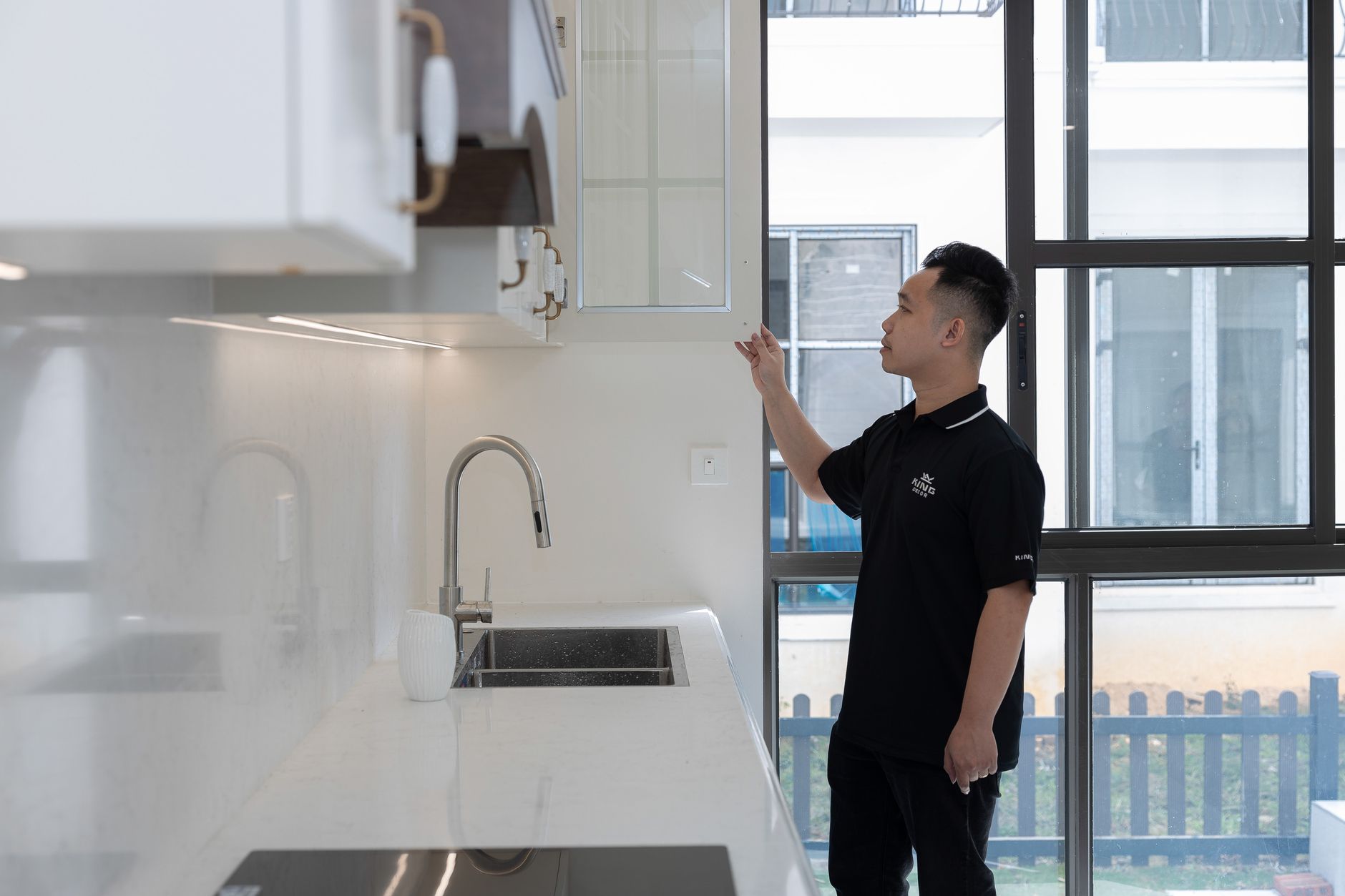
Renovate a unit when repair costs keep recurring, the unit underperforms rent comps, or major finishes are past their service life; repair it when the problem is isolated and the rest of the unit is in good condition. The dividing line is rarely obvious from a single work order, so property managers need a repeatable way to compare the cost of renovating against the cost of continuing to repair.
This guide gives you that framework: a renovate-vs-repair decision table, an ROI calculation you can run in minutes, typical scopes and material lifespans, and how renovation timing fits into your turnover schedule.
Renovate vs. Repair: The Decision at a Glance
| Signal | Repair | Renovate |
|---|---|---|
| Number of work orders on the same unit in 12 months | 1–2, unrelated issues | 3 or more, or the same system |
| Age of flooring, cabinets and countertops | Within expected lifespan | At or past expected lifespan |
| Rent compared to updated comps | At or above market | Below market for the floor plan |
| Vacancy history | Leases quickly | Sits vacant or needs repeated concessions |
| Scope of the problem | One system or surface | Multiple systems (flooring, paint, fixtures, cabinets) |
If most rows point to “repair,” schedule the work through your normal property maintenance process. If most point to “renovate,” treat the unit as a project rather than a series of work orders.
When to Repair Instead of Renovate
- The issue is isolated: one appliance, one fixture, one section of flooring.
- The unit already rents at or above comparable units in the community.
- Finishes are within their expected lifespan and show normal wear, not failure.
- The resident is staying and the lease term doesn’t justify a full scope.
Repair-first is also the right call for most turnovers. A make-ready with fresh paint, a deep clean and a repair punch list is enough for units that don’t show the signals above. Our apartment make-ready checklist covers that scope in detail.
When Renovation Pays Off
Renovation makes financial sense when the unit is losing rent income every month it stays outdated, not just when it looks tired. Watch for:
- A rent gap between this unit’s floor plan and recently renovated units in the same community or submarket.
- Repeat repairs on the same cabinets, countertops or flooring that cost more, cumulatively, than a one-time renovation.
- Longer days-on-market for that unit type compared with renovated units.
- Original finishes from the property’s construction date that are now past their expected service life.
Calculating Renovation ROI
A simple payback calculation is usually enough to support a renovation decision:
Payback period (months) = Renovation cost ÷ (New monthly rent − Old monthly rent)
Example: a one-bedroom unit renovation costs $6,500 and lifts achievable rent from $1,350 to $1,550, a $200 monthly gain. $6,500 ÷ $200 = a 32.5-month payback. Compare that payback period against your average resident tenure and hold period for the asset. Add avoided repair costs and reduced vacancy days to the calculation for a fuller picture, and weigh it against continuing to absorb emergency repairs; our guide to reducing emergency repair costs shows how those costs compound when deferred.
What a Unit Renovation Typically Includes
AMB Services scopes renovations and property improvements around the items that actually move rent and reduce future work orders:
- Flooring: replacing worn carpet with LVP or refinishing tile, which also cuts long-term cleaning costs.
- Drywall and painting: patching, skim coats and a full repaint in a consistent, durable finish.
- Cabinets and countertops: refacing or replacing, often the highest-visibility upgrade per dollar spent.
- Fixtures and hardware: lighting, plumbing fixtures, door hardware and outlet covers.
- Structural improvements: for larger scopes, layout changes, drywall repairs behind fixtures or corrections found during a renovation.
Typical Lifespan of Common Finishes
| Finish | Typical lifespan in a rental unit |
|---|---|
| Carpet | 3–5 years per turn, replace at signs of matting or odor |
| Luxury vinyl plank (LVP) | 10–15 years |
| Interior paint | Repaint at every turn or every 2–3 years |
| Laminate countertops | 10–15 years |
| Cabinet boxes | 15–20 years, fronts can be refaced sooner |
| Plumbing and light fixtures | 10–15 years |
Use these ranges alongside your unit-level maintenance history, not in place of it. A unit with heavy resident turnover or water exposure will need renovation sooner than these averages suggest.
Coordinating Renovation with Turnover
Renovations are most efficient when scheduled around a vacancy rather than while a resident is in place. Flag renovation candidates during the notice-to-vacate period so the scope, materials and crew are ready the day the unit turns, instead of adding days to an already tight make-ready timeline.
Want a second opinion on a specific unit? Send us the unit details for a free renovate-vs-repair assessment.
Renovate with a Team That Also Handles the Turnover
AMB Services provides property maintenance, preventive maintenance, specialized cleaning and renovations for apartment communities and condominiums across South Florida and throughout Florida. One provider scopes the renovation, completes the make-ready and documents every unit in the AMB App. Send us your property details and receive a proposal within 48 hours.
Frequently Asked Questions
How do I know if a unit needs renovation instead of repair?
Look at repeat work orders on the same unit, its age relative to typical finish lifespans, and its rent compared to recently renovated comps. Three or more repairs on the same unit within a year, or finishes past their expected service life, both point toward renovation instead of another repair.
What is a typical ROI payback period for an apartment unit renovation?
Divide the renovation cost by the monthly rent increase it supports. A $6,000 to $8,000 renovation that adds $150 to $250 in monthly rent typically pays back in 24 to 40 months, before counting avoided repair costs and reduced vacancy days.
Should I renovate a unit while a resident is living there?
Full renovations are far more efficient during a vacancy. Flag renovation candidates as soon as a resident gives notice so materials and crews are ready the day the unit turns, rather than extending an occupied make-ready.
What does AMB Services include in a unit renovation?
Flooring replacement, drywall repair and painting, cabinet and countertop refacing or replacement, fixture and hardware upgrades, and structural corrections when needed. Scope is set per unit based on condition and rent goals.
How does renovation affect future maintenance costs?
Replacing worn flooring, fixtures and cabinets during a renovation reduces the frequency of emergency repair calls tied to those same components, which lowers maintenance cost per unit over the following turns.
See our full renovations and property improvements service and pair a renovation with our preventive maintenance checklist to keep the unit in shape after it turns.